From Colosseums to Corporate Keynotes: Who Actually Invented Event Management?


If you look up the official job description of a modern event planner, you will find terms like logistics coordination, vendor procurement, experiential branding, and risk mitigation. It reads like a modern corporate framework, leading many to believe that event management is a product of 21st-century capitalism. But who actually invented it?
The truth is, no single pioneer sat down and mapped out the blueprint for event management. Instead, it evolved across thousands of years, transitioning from an ancient political tool to royal pageantry, and eventually, into the multi-billion-dollar global industry we navigate today. Let’s take a journey through the key milestones that built the foundation of how human beings gather.

1. Ancient Logistics: The Political and Cultural Foundations
Long before modern software, ancient civilizations were pulling off logistical feats that would terrify today’s operations directors. In these early eras, large-scale events were organized to maintain social order, project political power, or fulfill religious obligations.
The Panhellenic Games of Greece: Starting reliably around 776 BCE, the ancient Olympic Games required a standardized system of event coordination. Organizers had to arrange the safe passage of athletes and spectators from warring city-states (the Olympic Truce), build temporary housing, coordinate massive vendor markets, and manage precisely timed religious sacrifices and sporting schedules.
The Roman Masters of Mass Entertainment: If modern event management is about crowd control and venue operations, the ancient Romans were the ultimate pioneers. Roman officials known as aediles were specifically tasked with organizing public games (ludi). During the 100-day opening ceremony of the Colosseum, managers had to direct the movement of up to 80,000 spectators using an intricate system of numbered arches and tickets, coordinate complex stage machinery, and oversee massive catering and sanitation operations.
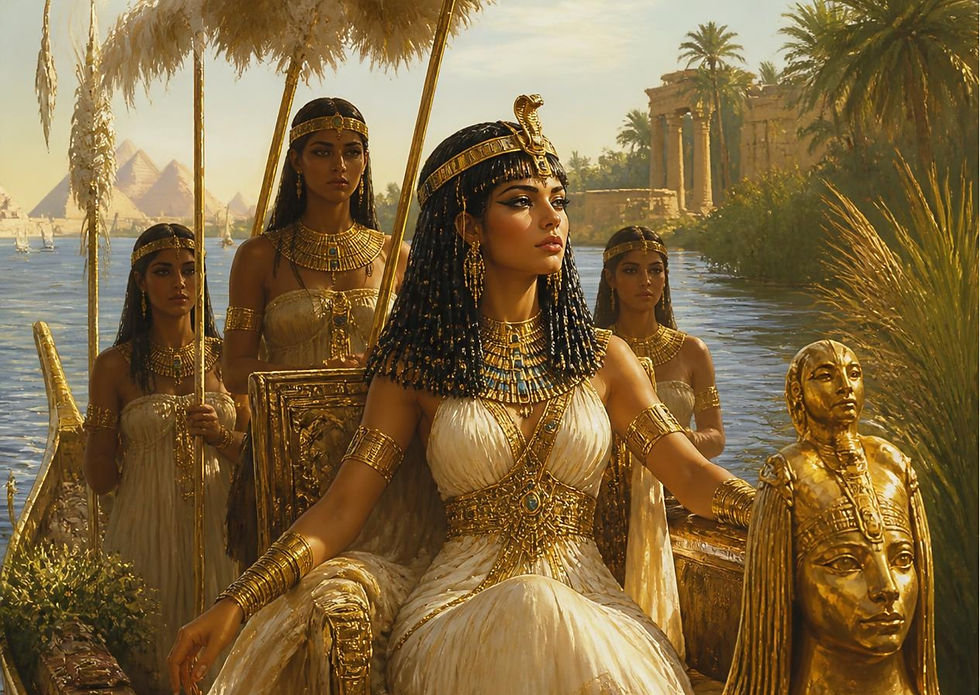
Historical Highlight: Cleopatra's Experiential Marketing Historians often playfully credit Cleopatra VII as one of the world's first true experiential event designers. When orchestrating high-stakes political meetings with Roman leaders like Mark Antony, she famously customized the entire sensory environment—sailing down the Cydnus River on a gold-plated barge with purple sails, burning intoxicating perfumes, and utilizing strategic lighting to deliberately sway her audience.
2. Medieval and Renaissance Pageantry: Protocol and Ceremony
As European royal courts grew more powerful, the nature of event management shifted from managing the masses to managing the elite. This era gave birth to the formal roles that laid the groundwork for today’s specialized hospitality industry.
Royal weddings, diplomatic tournaments, and coronations required extreme precision. This brought about the rise of the Master of Ceremonies—a designated official responsible for executing complex cultural protocols, managing intricate seating charts, directing heralds, and ensuring that the host's wealth and status were perfectly projected without a single social misstep.
3. The Industrial Revolution: The Birth of "MICE"
The shift from a localized craft to a commercial corporate sector happened during the Industrial Revolution in the late 18th and 19th centuries. Two major catalysts permanently altered how the world gathered:
The Infrastructure Boom: The widespread expansion of railways and steamship networks made long-distance travel fast, predictable, and affordable for the middle and upper-middle classes.
The Corporate Need: As global commerce grew, industries needed a way to showcase innovations, pitch investors, and network on a massive scale.

This era effectively birthed the modern MICE sector (Meetings, Incentives, Conferences, and Exhibitions). The defining moment of this transition was The Great Exhibition of 1851 in London. Spearheaded by Prince Albert, this mega-event brought together over 100,000 exhibits and welcomed over 6 million visitors. It established the modern blueprint for international trade shows, ticket formatting, and venue layout layout.
4. The 20th Century: Professionalization and Associations
While the 19th century built the infrastructure, the 20th century turned event planning into a recognized, standalone professional career. As the post-WWII corporate boom accelerated, companies realized that executing flawless events required specialized skills that transcended basic administrative duties.
Wealthy families began outsourcing massive private celebrations, and corporations began allocating dedicated budgets for annual meetings, product rollouts, and media galas. To regulate and professionalize this expanding workforce, formal industry bodies began to emerge.
The founding of Meeting Professionals International (MPI) in 1972 and the International Live Events Association (ILEA) in 1987 institutionalized event management. These organizations introduced formalized training, safety compliance, ethical standards, and academic certifications, cementing the planner's seat at the strategic table.
Conclusion: The Takeaway for Modern Planners
So, who created event management? It was created by the collective evolution of human connection. It was born out of Greek competition, refined by Roman crowd logistics, polished by Renaissance etiquette, scaled by industrial technology, and professionalized by modern corporate strategy.

The next time you manage an event app, negotiate a vendor contract, or coordinate a multi-stage corporate schedule, remember: you aren't just practicing a modern business skill—you are continuing a historic lineage of bringing people together that spans thousands of years.


Comments